

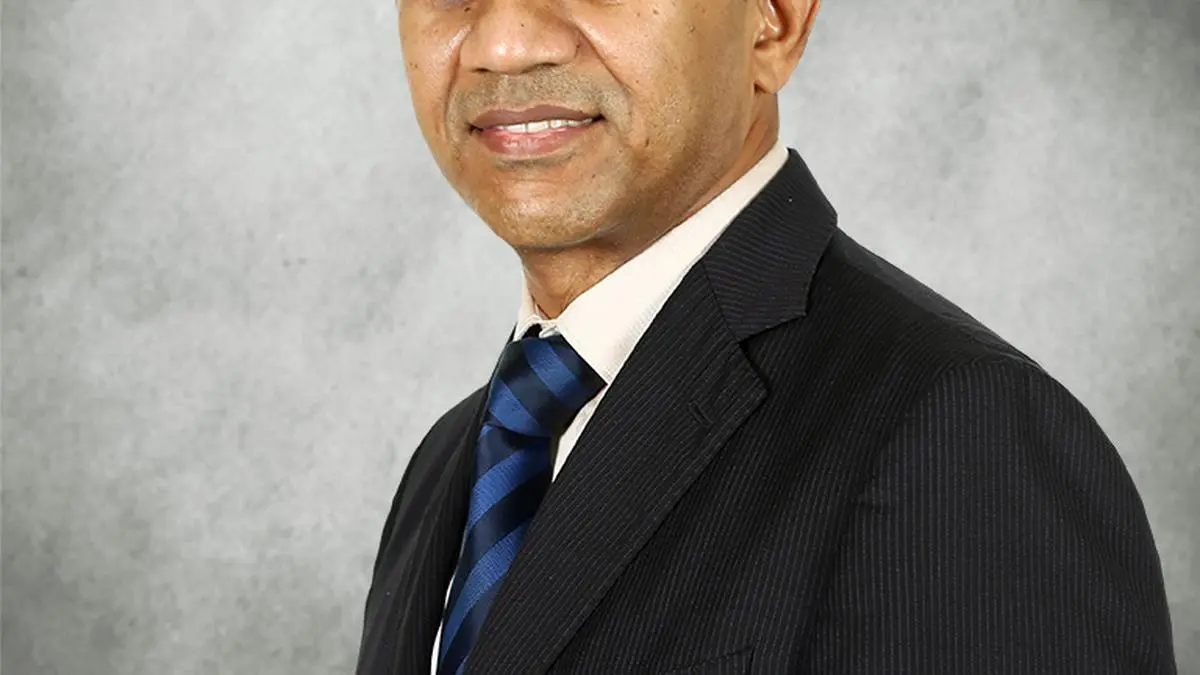
Venkatraman Swaminathan, Vice President & Country General Manager, India & SAARC, Secure Power Division of Schneider Electric
The rise of AI is driving a major shift in India’s data center landscape, says Schneider Electric’s Venkatraman Swaminathan. Unlike the cloud era, AI demands low-latency, high-performance infrastructure, pushing growth beyond metros into tier 2 and 3 cities. With India processing 20% of global data but holding just 3% of data center capacity, edge and regional facilities are set to play a critical role in bridging this gap.
According to Venkatraman Swaminathan, Vice President & Country General Manager, India & SAARC, Secure Power Division of Schneider Electric, the rise of AI, particularly Gen AI and large-scale machine learning, has increased the demand for data centers in India, far exceeding the growth during the early cloud computing era.
“During the cloud boom, data centers were built to support scalable storage and processing for enterprise applications and digital services. However, AI has introduced a new paradigm – it requires high-performance computing infrastructure, dense GPU clusters, and advanced cooling systems, all of which necessitate a fundamentally different data center architecture,” he shared.
Historically, Swaminathan pointed out, Mumbai has been the heart of data centers in the country due to unlimited and secure power supply, along with submarine cable landing stations. The city accounts for 50-55 percent of India’s data center consumption.
Chennai ranks as the second-largest market due to the presence of multiple submarine cable landing stations, while Puri is rapidly emerging as a key hub for undersea cable connectivity.
Similarly, various state governments are taking the initiative to bring in connectivity, like in Bangalore and Hyderabad. The South or the West of India is said to gain positive traction in this area.
“Till the cloud era, connectivity was fine as long as you were in a metro city. But with the advent of AI, latency becomes a major issue. For all AI applications, you need the server as close as possible to where the application is running. AI will be sensitive to latency, especially because wireless signals can’t easily pass through trees or concrete. That’s why there will be a rise in edge sites,” he said.
Edge sites are likely to emerge in cities like Lucknow and Mohali, which were earlier not in focus. Swaminathan noted that with the rise of AI, the company’s customers are now focusing on B- and C-class cities, where smartphone penetration is growing rapidly. This will accelerate AI adoption, but also create challenges around latency, especially with AI assistants like Copilot becoming more integrated into everyday use.
As a result, edge sites are expected to emerge quickly. AI will drive the need for more regional and local data centers. While earlier, the standard was around 8 to 10 kilowatts (kW) per rack, today, what was once considered a special design, 70 to 80 kW, is becoming standard, with 125 kilowatts increasingly viewed as the new normal, he noted.
In India, most players are still in the inference stage, with discussions around 42 or even 75 kW setups, though no large-scale deployments have occurred yet. But as this shifts to the edge, small, AI-ready data centers of around 500 kW in total capacity, housing just 2–3 high-density racks. He shared that many customers are exploring this, with deployments likely to begin in the next one to two years.
In India, one of Schneider’s global hubs, the company is working with BFSI players and leading IT companies by offering infrastructure solutions, consulting, and modernization services across enterprise, colocation, and edge environments.
The country is also poised to become a hotspot for AI data centers due to its cost-effective deployment and rapid technology adoption. With the cost per megawatt of deployment being at least 30% lower than global averages, India is attracting significant foreign direct investment.
As AI applications expand into sectors like agriculture and autonomous vehicles, the need for regional and edge data centers is growing. Schneider anticipates a hybrid model of hyperscale, regional, and edge facilities to meet the diverse demands of AI-driven applications across India.
More Like This

Published on July 31, 2025