

Flexible Circuit Boards Offer Innovations
Across a wide range of electronic products, from computers and mobile devices to industrial and aerospace equipment, flexible circuit boards offer unique solutions that enhance functionality and improve performance. These innovations are made possible by their ability to bend and adapt, a quality that makes them ideal for environments with lots of movement or stress. This flexibility opens up creative design options, making flex PCBs well suited to the latest wearable technologies and other devices that must adapt to the user’s body as they move.
The structure of a flex circuit board includes several layers, each playing an important role in the system’s flexibility and adaptability. Conductors allow electrical current to flow, insulators separate the conductors from one another and protect the copper from damage, and adhesives bond the components to the underlying surface of the circuit. These elements are a vital part of any flexible circuit board and must be carefully considered to achieve a balanced blend of strength and flexibility.
For example, the materials used in the construction of a flexible circuit board must be durable enough to withstand high levels of pressure and movement. The flexibility of a flex circuit is also dependent on its thickness, which should be carefully calibrated to prevent a bending area from getting thin. The layer stacking strategy is another crucial factor, as the flex PCB must be built with layers that can withstand a minimum amount of stress or stretching. A tin finishing is appropriate for these conditions, but the best choice is soft gold covering, which can be applied to the ends of the copper circuits to reduce their chance of damage.
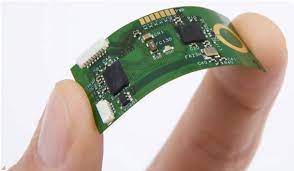
Flexible Circuit Boards Offer Innovations That Enhance Functionality and Performance
Understanding the basics of a flex PCB’s construction helps designers and engineers select the most appropriate option for their specific projects. This begins with recognizing that there are three main types of materials that are used in the production process, each serving a unique purpose.
Polyimide and polyester are two of the most popular flex PCB materials. Both are renowned for their durability and flexibility, and both help to balance the essential qualities of a flexible circuit board. Polyimide provides the flex PCB with its fundamental structural support, while polyester binds the conductors and ensures that they stay in place.
The flex PCB’s core is typically made from a flexible polymer and the substrate from a polyimide film, which is often reinforced with stiffeners of FR-4 fiberglass and pressure sensitive adhesives (PSA). Rigid sections are then attached to the flex circuit using the same material and procedures as standard rigid PCBs. This design allows manufacturers to produce flexible PCBs that are robust and reliable, able to stand up to even the harshest environments.
This level of durability makes flexible circuit boards a top choice for industrial and commercial applications that require equipment to withstand repeated flexing or bending. Whether a flex circuit is needed for wearable technology or other projects, choosing the right material and construction processes will make all the difference in the final product’s reliability and performance.