

solder paste play in PCB fabrication assembly
Solder paste is a crucial component in PCB (Printed Circuit Board) fabrication assembly, playing a pivotal role in the attachment of electronic components to the PCB. This thick, sticky material, composed of fine metal solder particles suspended in a flux medium, is used to create reliable solder joints between components and the PCB’s copper pads. Solder paste facilitates the creation of strong, conductive connections, ensuring that the finished PCB operates correctly in its electronic applications. Its proper application is essential for achieving high-quality and durable assemblies that meet the stringent requirements of modern electronic devices.
The primary function of solder paste in pcb fabrication assembly is to serve as an adhesive medium for the surface-mount components (SMCs) during the soldering process. Solder paste is applied to the PCB’s copper pads, where components are to be placed. The paste consists mainly of fine metal solder powder (usually a mixture of tin and lead, or lead-free alloys such as tin, silver, and copper) combined with flux, which helps remove oxidation and allows the solder to flow smoothly. This process ensures that the components are securely attached to the PCB, forming a strong mechanical bond that withstands physical stresses and environmental factors.
During the assembly process, the first step is the application of solder paste to the PCB. This is typically done using a technique called stencil printing, where a metal stencil with openings corresponding to the component pads is placed over the PCB. A thin layer of solder paste is then spread across the stencil, filling the openings and leaving the desired amount of paste on each pad. The precision with which the solder paste is applied is critical, as too little paste may lead to weak or insufficient solder joints, while too much paste can cause solder bridges, which can result in short circuits and operational failures.
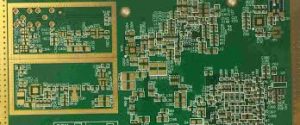
What role does solder paste play in PCB fabrication assembly?
Once the solder paste is applied, the components are placed on the PCB. This is typically done by an automated pick-and-place machine, which precisely positions each component on top of the solder paste. The solder paste holds the components in place until they are soldered, providing a temporary adhesive bond. The board then moves to the next stage: the reflow soldering process.
In reflow soldering, the PCB is heated in a reflow oven to a temperature where the solder paste melts, typically between 180°C and 250°C, depending on the specific solder alloy used. During this heating process, the solder particles fuse together, creating strong, electrically conductive joints between the components and the PCB pads. The flux within the solder paste helps to clean the metal surfaces and promote the formation of these bonds by reducing oxidation. As the PCB cools, the solder solidifies, forming permanent connections.
Solder paste plays a significant role in the quality and reliability of the solder joints formed during this process. The flux not only aids in cleaning and preventing oxidation but also helps in the even distribution of the solder, ensuring that the joint is formed correctly. Poorly applied solder paste can lead to defects such as cold solder joints, which are weak and prone to failure, or excessive solder, which can cause bridges between adjacent pads. Therefore, ensuring the precise application of solder paste and maintaining proper temperature profiles during the reflow process are essential for achieving high-quality PCB assemblies.
In addition to its role in surface-mount technology (SMT) assembly, solder paste is also used in wave soldering for through-hole components, though in smaller quantities. In this process, the paste is applied to the leads of the components before they are dipped into a wave of molten solder. This process is often used for components that are not suitable for SMT, such as connectors or larger components with multiple pins.
The quality of the solder paste itself is also a critical factor in PCB fabrication assembly. The paste must be of high quality to ensure that the solder joints are strong and reliable. Factors such as the particle size of the solder powder, the type of flux, and the viscosity of the paste must all be carefully controlled to achieve optimal results. Manufacturers often perform inspections, such as Automated Optical Inspection (AOI) and X-ray inspection, to ensure that the solder paste has been applied correctly and that the resulting solder joints are of the highest quality.